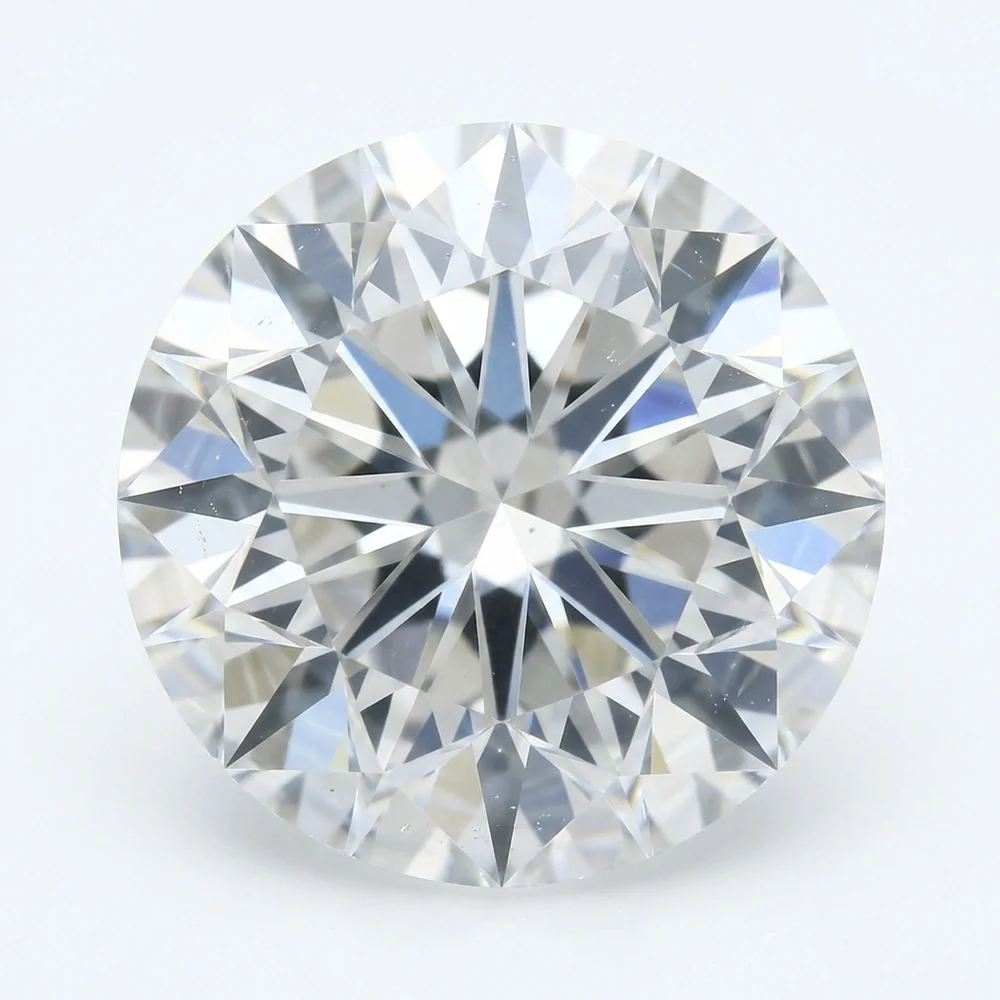
Colorless (D–Z scale) to fancy yellow, pink, blue, green, and brown, exhibiting adamantine luster and 0.044 dispersion.
Chemical formula
C (Isometric Crystalline Carbon)Colorless, near-colorless, or fancy yellow/green/blue-green with adamantine-to-submetallic luster and rainbow dispersion (0.104) more than double that of diamond (0.044).
| Mineral Family | Other Gemstones |
|---|---|
| Mineral Species | Moissanite (Carbide) |
| Gemological Variety | Laboratory-Grown Gem Moissanite |
| Chemical Composition | SiC (Silicon Carbide) |
| Crystal System | Hexagonal (4H / 6H Polytypes) |
| Mohs Hardness | 9.25 Mohs |
| Specific Gravity | 3.21 – 3.23 |
| Refractive Index | 2.648 – 2.691 (Doubly refractive; Birefringence 0.043) |
Colorless, near-colorless, or fancy yellow/green/blue-green with adamantine-to-submetallic luster and rainbow dispersion (0.104) more than double that of diamond (0.044).
Natural moissanite was first identified in 1893 by Nobel laureate Henri Moissan in the Canyon Diablo meteorite and occurs in nature only as microscopic grains in meteorites and deep mantle rocks. Virtually 100% of facet-grade moissanite used in jewelry is laboratory-grown.
Valued in its own right as a super-hard (9.25 Mohs), conflict-free, laboratory-created gemstone with extraordinary fire and brilliance.
Engagement rings, solitaire studs, tennis bracelets, and custom fine jewelry.
CRITICAL DISCLOSURE: Gem-quality Moissanite is a laboratory-grown silicon carbide (SiC) gemstone, NOT a diamond and NOT a natural earth-mined stone. FADI Gems always labels Moissanite explicitly as laboratory-created Silicon Carbide.
Extremely durable and heat-resistant; clean easily with warm soapy water and a soft brush.
Born from stardust discovery and modern crystal-growth engineering; represents brilliance, innovation, and accessible luxury.
Note: Cultural and birthstone traditions are presented strictly as historical folklore, never as scientifically verified medical or metaphysical effects.
Colorless (D–Z scale) to fancy yellow, pink, blue, green, and brown, exhibiting adamantine luster and 0.044 dispersion.
C (Isometric Crystalline Carbon)Naturally colorless, champagne-sherry (Skardu/Shigar pegmatites), golden-orange (Imperial), or rare natural cyclamen pink (Katlang, Pakistan); also vivid sky, Swiss,...
Al₂SiO₄(F,OH)₂ (Aluminum Fluoro-Hydroxyl Silicate)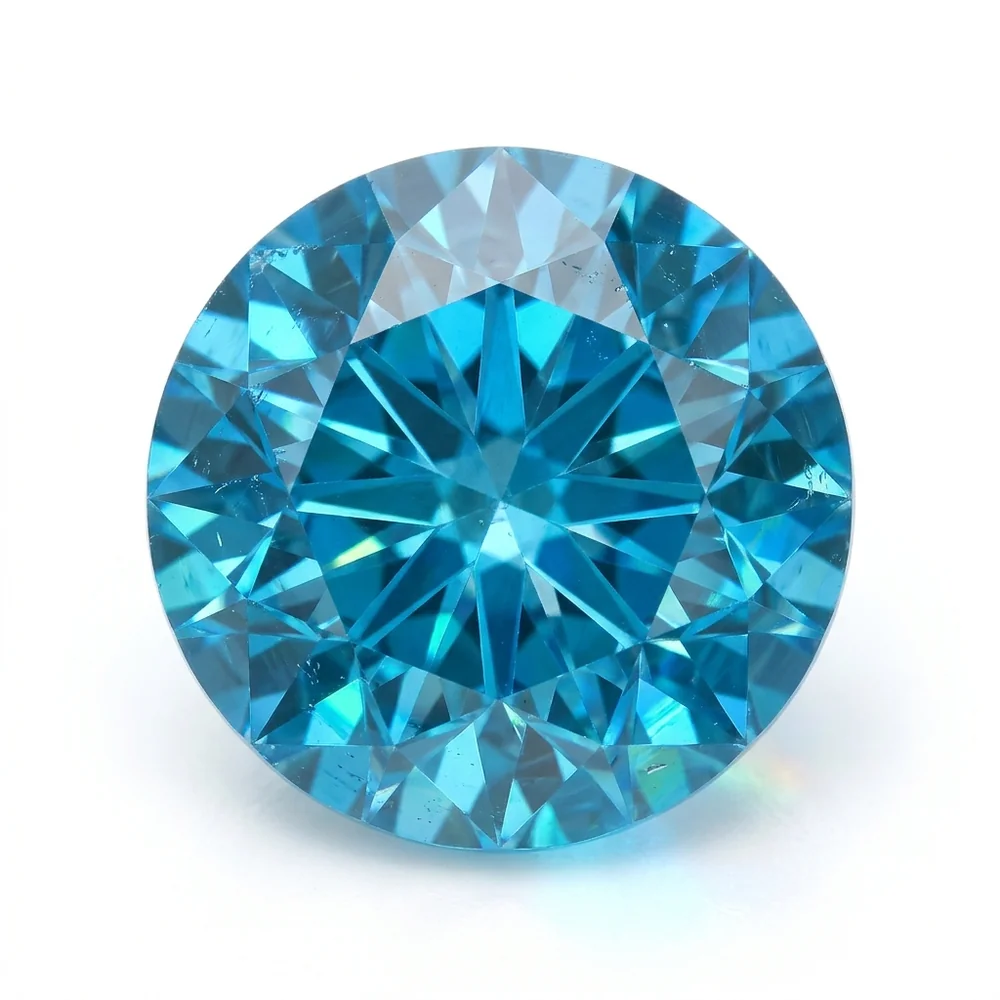
Electric Starlight blue, cinnamon-honey, imperial red, forest green, and diamond-bright colorless, exhibiting sub-adamantine luster and strong double refraction...
ZrSiO₄ (Zirconium Silicate, with trace Hf, U, Th)Popular searches