Honey-yellow to olive-green (Topazolite) and jet black (titanium-rich Melanite).
Chemical formula
Ca₃Fe³⁺₂(SiO₄)₃ (Calcium Iron Silicate)Blood red to purplish-red; forms a continuous solid solution with almandine (including rhodolite).
| Mineral Family | Garnet |
|---|---|
| Mineral Species | Pyrope (Pyralspite Series) |
| Gemological Variety | Pyrope |
| Chemical Composition | Mg₃Al₂(SiO₄)₃ (Magnesium Aluminum Silicate) |
| Crystal System | Isometric (Cubic — dodecahedral/trapezohedral) |
| Mohs Hardness | 7.0 – 7.5 Mohs |
| Specific Gravity | 3.65 – 3.87 |
| Refractive Index | 1.730 – 1.760 (Singly refractive) |
Blood red to purplish-red; forms a continuous solid solution with almandine (including rhodolite).
Originates in ultramafic mantle rocks, kimberlites, and high-pressure metamorphic terrains.
Chrome-pyropes and rose-purple rhodolite intermediate garnets with high brilliance and zero cleavage.
Rings, Victorian-inspired cluster settings, pendants, and earrings.
Almost universally untreated in the gemstone trade.
Clean with warm soapy water and a soft brush; avoid sudden thermal shock.
From the Greek 'pyropos' (fiery-eyed), symbolizing warmth, loyalty, and vitality. January birthstone.
Note: Cultural and birthstone traditions are presented strictly as historical folklore, never as scientifically verified medical or metaphysical effects.
Honey-yellow to olive-green (Topazolite) and jet black (titanium-rich Melanite).
Ca₃Fe³⁺₂(SiO₄)₃ (Calcium Iron Silicate)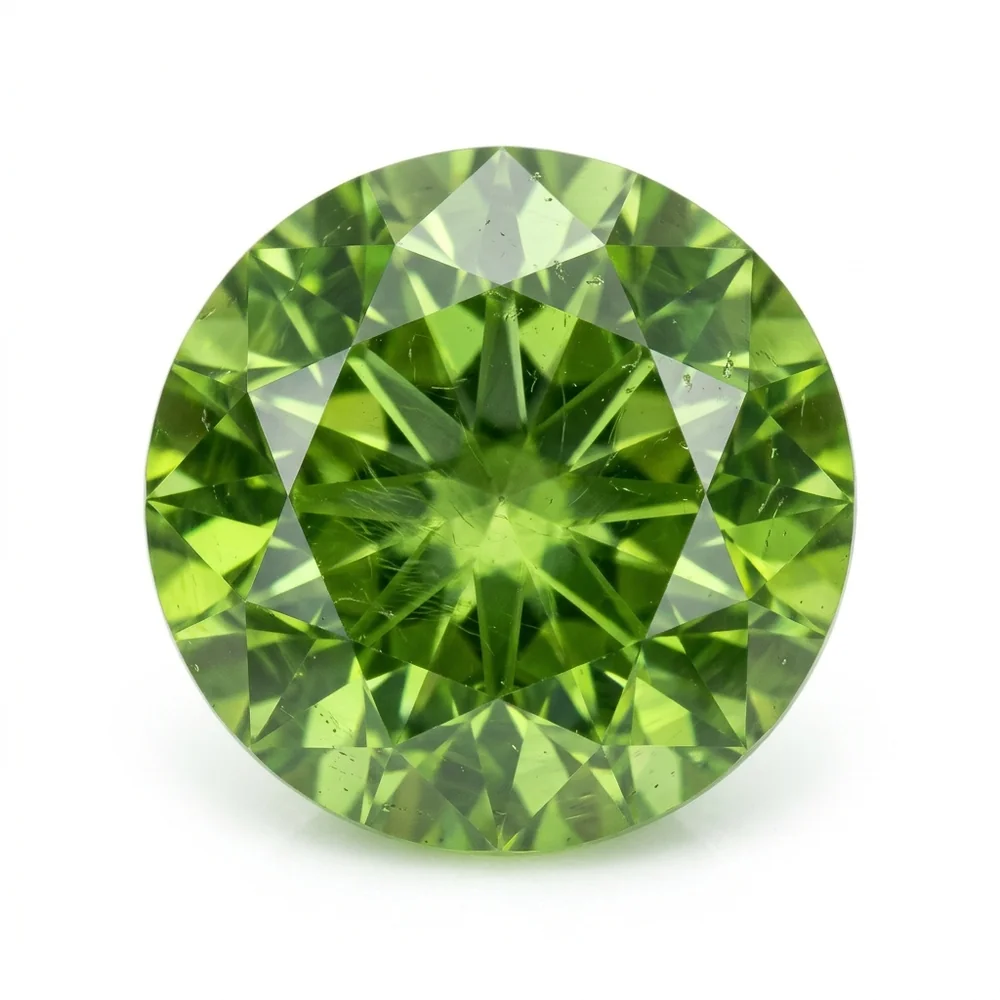
Yellowish-green to intense emerald-green with fiery rainbow dispersion flashes.
Ca₃Fe³⁺₂(SiO₄)₃ + Cr³⁺Deep claret red, brownish-red, to violet-red.
Fe₃Al₂(SiO₄)₃ (Iron Aluminum Silicate)Popular searches