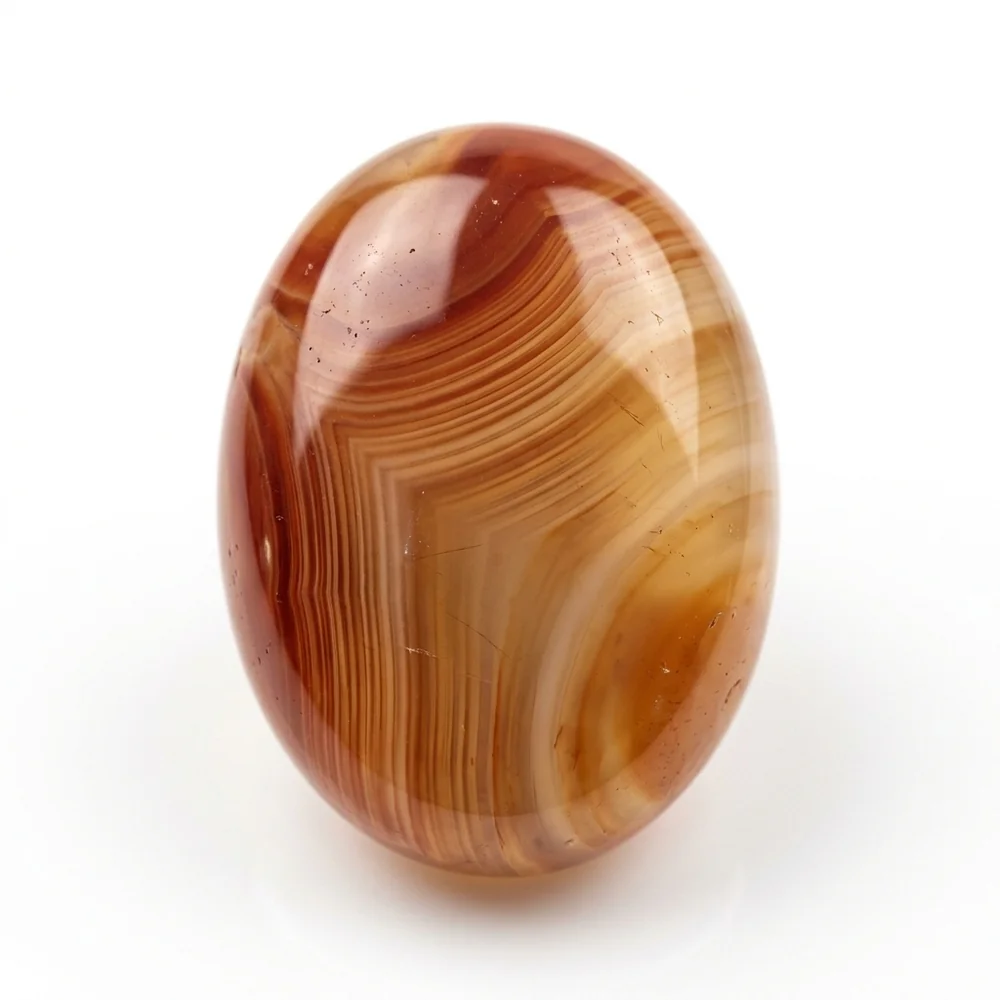
Curved or angular concentric banding in translucent white, gray, amber, red, and blue-gray tones, as well as dendritic...
Chemical formula
SiO₂ (Microcrystalline fibrous silica with trace iron/manganese oxides)Vivid apple green to mint green; unlike emerald or chrome chalcedony, its color comes from trace nickel rather than chromium.
| Mineral Family | Chalcedony / Microcrystalline Quartz |
|---|---|
| Mineral Species | Quartz (Chalcedony Aggregate) |
| Gemological Variety | Chrysoprase |
| Chemical Composition | SiO₂ + Ni²⁺ (Nickel-bearing phyllosilicate/pimelite inclusions) |
| Crystal System | Trigonal (Microcrystalline aggregate) |
| Mohs Hardness | 6.5 – 7.0 Mohs |
| Specific Gravity | 2.58 – 2.64 |
| Refractive Index | 1.530 – 1.540 |
Vivid apple green to mint green; unlike emerald or chrome chalcedony, its color comes from trace nickel rather than chromium.
Forms in lateritic weathering profiles above nickel-bearing serpentinite and ultramafic rocks (Australia, Tanzania, Kazakhstan).
The rarest and most valuable variety of translucent single-color chalcedony, often compared visually to fine imperial jade.
High-domed cabochons, bezel-set rings, and ear drops.
Natural nickel-colored chrysoprase must be distinguished from artificially green-dyed chalcedony using spectroscopic examination.
Avoid prolonged exposure to dry heat or intense sunlight; store away from hot lamps and clean with cool soapy water.
Prized by Alexander the Great and Frederick the Great; associated with spring renewal, joy, and optimism.
Note: Cultural and birthstone traditions are presented strictly as historical folklore, never as scientifically verified medical or metaphysical effects.
Curved or angular concentric banding in translucent white, gray, amber, red, and blue-gray tones, as well as dendritic...
SiO₂ (Microcrystalline fibrous silica with trace iron/manganese oxides)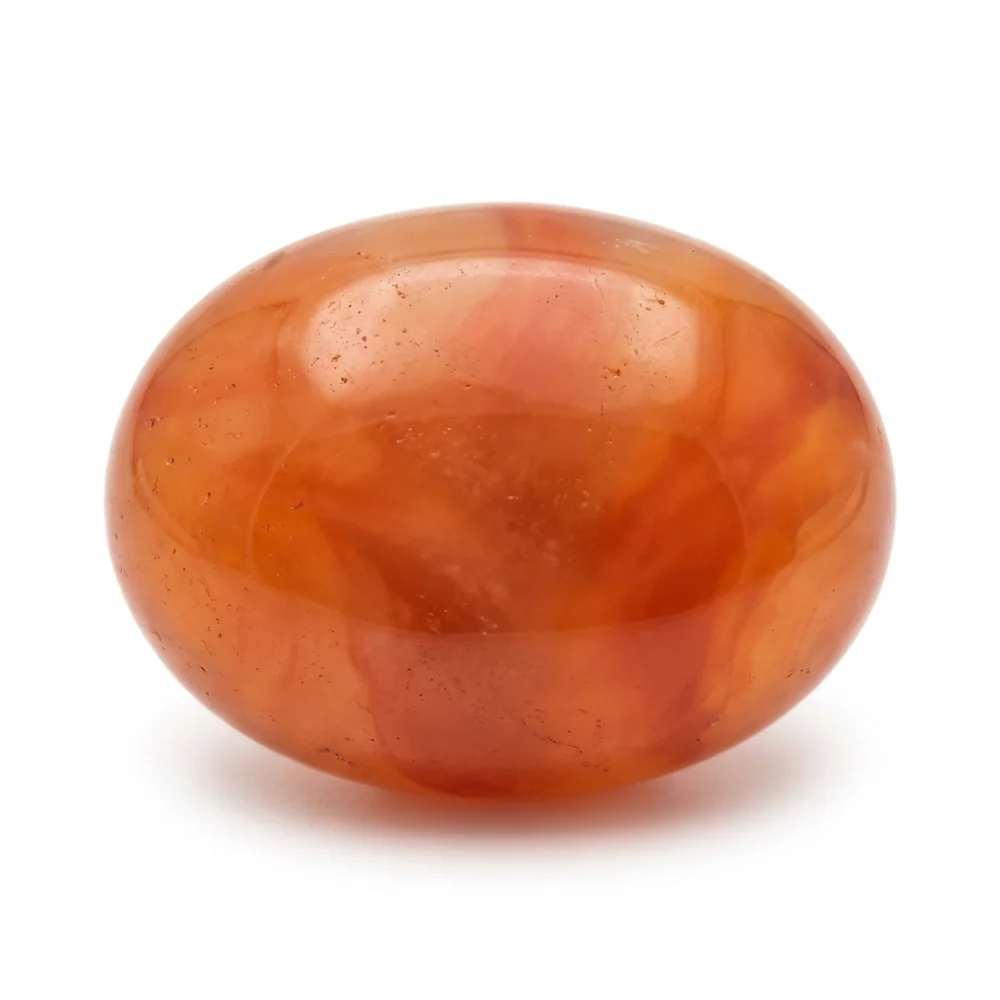
Translucent warm orange, fiery sunset red, to brownish-red (sard).
SiO₂ + Fe₂O₃ (Hematite/Iron Oxide sub-microscopic inclusions)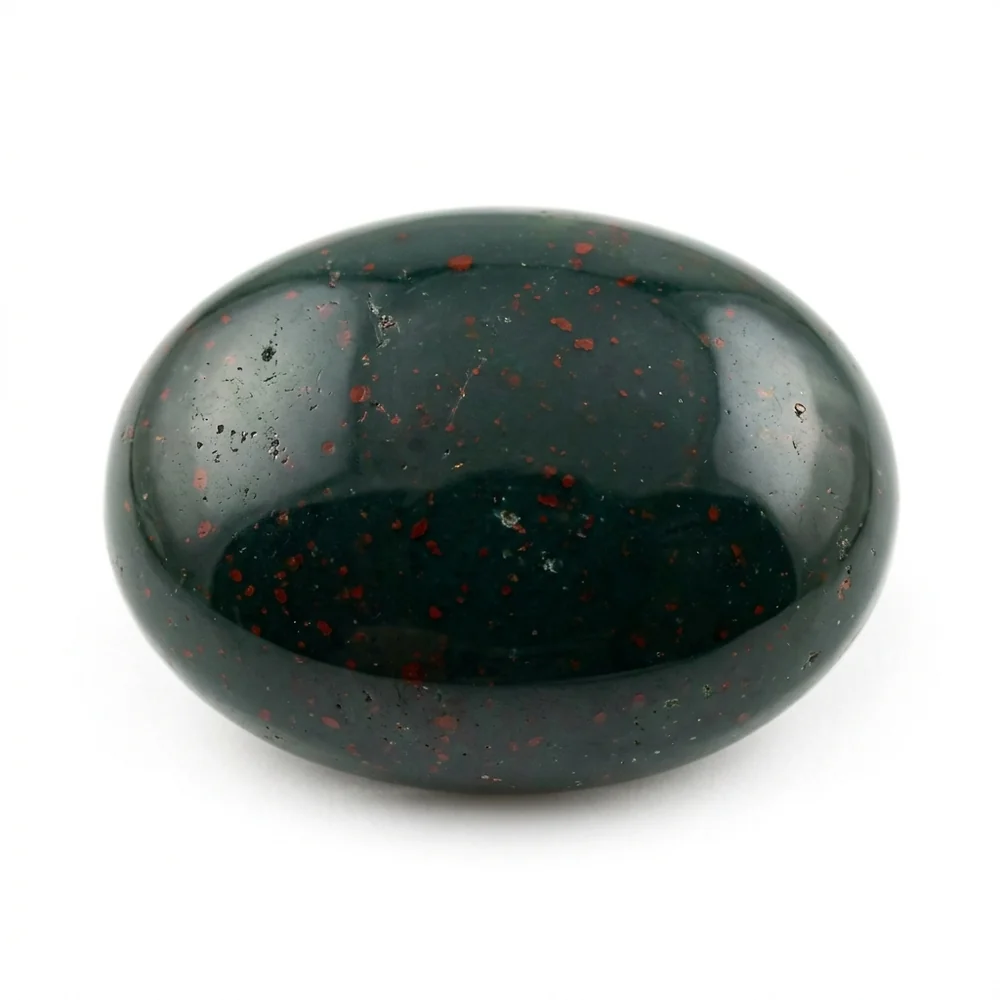
Deep forest-green semitranslucent to opaque chalcedony speckled with vivid crimson spots of iron oxide (hematite).
SiO₂ + Chlorite/Amphibole (green) and Hematite (red spots)Popular searches